

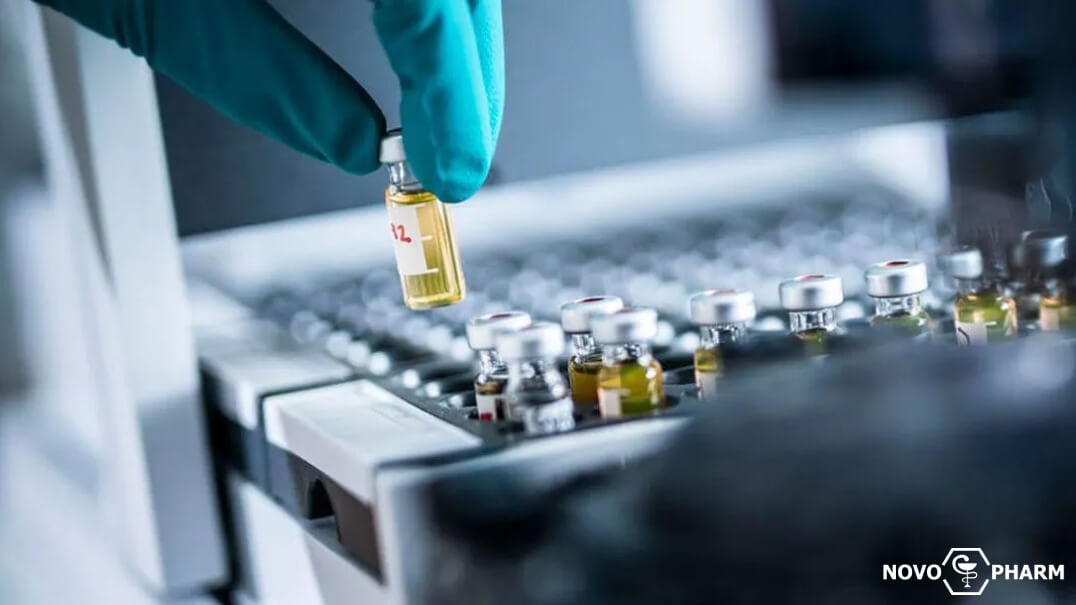
Chemical purity is one of the core quality indicators in anabolic steroid manufacturing. It affects stability, safety, and the predictability of biological effects. This article explains how high purity is achieved, which analytical tools verify it, and why independent laboratories often report consistently high purity levels.
What ‘purity’ means in steroid production
In the context of anabolic steroid manufacturing, chemical purity denotes the minimal presence of structurally related by-products, unreacted starting materials, residual solvents, catalytic residues, and degradation products arising during synthesis or storage. Even low-level deviations in composition can alter the compound’s pharmacokinetic profile, receptor-binding characteristics, or physicochemical stability.
Because these substances are used in dose-sensitive applications, purity must not only be high but also reproducible across production batches. Consistently low impurity levels are therefore a critical requirement for materials intended to meet pharmaceutical-grade specifications.
Why purity matters
The pharmacological reliability of anabolic steroid compounds is highly dependent on their chemical purity. Even trace-level impurities can exert disproportionate effects due to their potential reactivity, biological activity, or interference with analytical measurements. Such impurities may:
- modify the intended pharmacodynamic or pharmacokinetic behavior of the compound;
- compromise dosing accuracy by contributing to the apparent mass of the active substance;
- introduce secondary chemical or biological activities not associated with the parent molecule;
- diminish storage stability by promoting oxidative, hydrolytic, or thermally induced degradation pathways.
Certain classes of contaminants, particularly residual solvents, reactive intermediates, or structurally related by-products, can accelerate degradation kinetics or alter absorption characteristics, resulting in variability in systemic exposure.
How anabolic steroids are purified
Achieving high-purity steroidal substances involves a multistage purification workflow in which each step targets a specific class of chemical impurities. No single method is sufficient on its own; instead, purification relies on a cumulative, orthogonal approach.
Recrystallization: the foundational step
Recrystallization is typically employed as the initial purification method due to its ability to selectively exclude non-crystalline impurities. The crude steroid is dissolved in a carefully selected solvent or solvent mixture under elevated temperature until full dissolution is achieved. Controlled cooling then induces nucleation and growth of the target compound’s crystal lattice, while the majority of impurities owing to differences in solubility and crystallization kinetics remain in the mother liquor.
Performing two or more recrystallization cycles substantially reduces impurity load and prepares the material for more discriminating separation techniques.
Chromatographic purification
Steroid intermediates and final products often contain impurities that are structurally similar and therefore challenging to remove by crystallization alone. Chromatographic separation is the preferred method for resolving such components.
Commonly employed techniques include:
- Flash chromatography — used at the preparative scale to eliminate bulk, less structurally complex impurities.
- HPLC (High-Performance Liquid Chromatography) — provides high-resolution separation of closely related steroidal molecules, synthetic intermediates, and trace-level by-products based on differential interactions with the stationary phase.
Additional orthogonal methods, such as liquid–liquid extraction, solid-phase extraction, or size-exclusion chromatography, may be implemented to remove residual solvents, catalyst fragments, or high-molecular-weight contaminants.
What affects analytical accuracy
The accuracy and reproducibility of purity measurements depend on a series of methodological and instrumental variables. The performance of analytical systems is directly influenced by instrument calibration, the condition of chromatographic columns, and the stability of detector response. Equally important is the suitability of the chosen analytical technique, as HPLC, GC, and MS each differ in sensitivity, selectivity, and compatibility with specific impurity classes.
Sample-handling procedures introduce another major source of variability. Factors such as solvent purity, dilution accuracy, filtration efficiency, and sample stability can significantly alter chromatographic peak shape and intensity. Environmental conditions sucha as temperature fluctuations, detector drift, and column aging, may further distort analytical output.
Key influences on accuracy include:
- calibration status and column performance;
- selection of analytical method (HPLC, GC, MS);
- solvent quality, dilution precision, and filtration;
- temperature, detector sensitivity, and instrument wear.
Because each of these variables can lead to over- or underestimation of impurity levels, strict adherence to validated protocols and routine maintenance is essential for generating reproducible and trustworthy data.
Conclusion
High-purity anabolic steroids are the result of careful synthesis, multi-stage purification, and rigorous analytical verification.
By combining recrystallization, chromatographic techniques, and spectrometric methods, manufacturers can consistently achieve pharmaceutical-grade quality.